Thursday, June 23, 2011
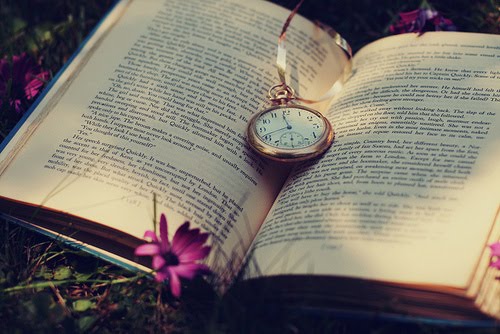
Book review: When God was a Rabbit
It is the title of this book that grabs your attention, and conveys the quirky innocence and ethereal energy of this tale.
It is these qualities that are the best aspects of When God was a Rabbit. The writing is especially beautiful, unique and enjoyable within and of itself.
But here in lies the problem. It is almost as if Sarah Winman wrote this book so that she could write, not because she had a story to tell. The book is one long ‘series of unfortunate events’ that seem to be written into the narrative only so that the author could explore her writing talent. Events and characters are beautifully described, but they seem to pile up and multiply just so that there is some kind of vague narrative and shell in which to place Winman’s beautiful words.
Indeed, one of the crucial moments of the book is mentioned in a short sentence and is never fully explained, leaving me frustrated at why Winman chose that event on which to craft her story. Other moments and characters also appear out of nowhere, then suddenly become important, and are more ‘hooks’ to hang the story on.
But despite all this, the book is still an enjoyable read that I recommend. It is a winding tale of growing up, and certainly explores ‘love in all its forms.’ Its best aspect is the writing itself, as well as a wonderful exploration on the nature of childhood. Winman manages to convey the concoction of innocence, fear, confusion and joy of being a child, which provides a powerful perspective of the world.
The book tells the story of Elly as she grows up, and her relationships with family and friends. A theme of ‘lost and found’ prevails, as Elly experiences both love and loss in her life and relationships. Her brother Joe, her best friend Jenny Penny, and her rabbit, called ‘god’, are colourful characters that provide the most weight and importance to the story. The book is divided into two parts – childhood and adulthood, which also gives it a little more structure.
The humour, intelligence, pain and learning reflected in the childhood narrative makes it the better half. It conveys so much about the innocence and intelligence of children, which I feel is the most important aspect of the book. Once we understand our childhood selves, we can look towards the future. Only where we know where we have come from can we know where we are going.
Wednesday, May 25, 2011
Ten reasons to love winter
Every year I look forward to winter, but when it arrives I hate it! Getting up in the dark is the worst. But I do know winter can also be a time of revitalization, and I just need to remind myself why I love it. So here are reasons to love winter…
1. Cuddling!
2. Lighting a fire (Love our fireplace!).

3. Walks in the park, enjoying the autumn leaves and the fresh air.
4. Walks on the beach, with the waves crashing.
5. Baking!
6. Soups, stews and lovely warm meals.
7. Wearing boots and scarves!
8. Lots of bubble baths.
10. Staying indoors, spending quality time with those I love <3
Images from We Heart It
Monday, May 23, 2011
Book review: To the End of the Land
Despite it being set in Israel, Grossman’s story could apply to any individual, family or nation that experiences the daily reality of conflict, war or terrorism. And at the same time, it is a searing study of his own society - of a country and its peoples who carry the traumas, dreams and fears of their nations, and who have to deal with the conflict reaching into the core of their lives. Portraying both a universal story and yet one that is so particular to Israel is just the first of one of Grossman’s many achievements in this novel.
To the End of the Land tells the story of Ora, whose son Ofer decides to return to the army instead of hiking with her in the north of the country, which was supposed to be their celebration to mark the end of his military service. Ora has a deep and instinctive fear that Ofer will die in this new operation, and spontaneously decides to go on the hike and avoid all forms of communication. She feels that if she runs away, the 'informers' will not be able to tell her if Ofer dies, and that he therefore cannot die.
Ora invites her old friend Avram to join her on the hike. If anything, Avram epitomises the story – a genius and true lover of life; he was captured as a POW, tortured and left for dead by the Egyptians in the 1973 Yom Kippur War, and is now a shadow of a human being. He symbolises the true horror of war – how it destroys love, family and the body and soul of a human being.
As they hike, Ora delves into the past, her history with Avram and her husband Ilan, and her sons, Ofer and Adam. The love triangle between Avram, Ilan and Ora, and the sons that were conceived by each man, create a powerful narrative. But it is Ora’s description of the minutiae of family life (as if saying it all will render her sons alive and safe) that is the true genius of this story. Grossman portrays family life in the most fascinating, painstaking and realistic narrative, following his theory of how the world doesn’t change in government halls and offices, but rather in the homes and interactions of families. And as Grossman builds and creates the intricate portrait of this family, he demonstrates how war and conflict can destroy it all – how it can invade and break down our most intimate spaces and what is most precious to us. This is the true tragedy of war, and it is what makes this novel a poignant, powerful and painful portrayal of war – and a classic anti-war novel that will stand the test of time.
The importance of land in the book is also a theme of incredible importance, as the land almost takes on a personable role as a character in the story. Indeed, as land is the central facet of the Israeli-Palestinian conflict and of so many other wars, its central role in the story highlights what a powerful place it holds in these narratives - but also how it is something separate, that should not govern human behaviour or choices.
Finally, the fact that Grossman’s son, Uri, was killed in the second Lebanon war at the time of writing this book gives the story an even more searing reality – as if that pain is woven between the words on the page. It is this tragedy that delivers the heart of Grossman’s message – that war destroys people, family, individuals and the very inner light of human beings. It is this message that will make To the End of the Land a classic piece of literature that could (hopefully) change the way we see war in the future.
Read more about the book and Grossman here: http://nyr.kr/aWEWqR
Tuesday, April 19, 2011
To market....
I've been going through a market phase lately, trying to make the most of the last few summer weekends when you want to be outdoors... plus I just love markets! We went to the one at Century City (pretty good) and the Tokai market (highly recommended - it's lovely!) so I was thrilled to see that the new City Bowl Market on Hope was opening on Saturday 16 April, which was just down the road from me!
It definitely lived up to expectations. The hall has the character and atmosphere that every market needs, and the selection of food, crafts and fresh produce were perfect. We walked around and were spoilt for choice for lunch. I landed up going for an incredible butternut, gorgonzola and lentil lasagne that was simply delicious!
We ate upstairs on a balcony where a bar was set up, overlooking the market below. We then walked around and I bought this gorgeous wooden heart necklace, sweet cactus and fresh fruit and avocados (grapes, avos, pomegranates and pretty much everything else were only R5!)
If I had any points for improvement they would be firstly the seating - although I loved the look of the tables and hay bales, the hay was difficult to sit on, especially as I was wearing a dress! Also, more outdoor area would be great. Lastly, as someone who tries to eat sugar-free/wheat-free, it would be great to have some sugar-free baked goods - but that's just my personal preference!
All in all, I'm so excited about this market. It was busy without being overcrowded, is so convenient and had a great selection of market goods to allow me to enjoy a market for many more weekends to come! And with winter arriving soon, the indoor aspect is certainly a plus. I predict it becoming hugely popular with Capetonians in the months ahead!
Unfortunately, I only took a few photos with my BlackBerry - they certainly don't do the market justice!
The City Bowl Market on Hope is open every Saturday from 9am - 2pm at 14 Hope Street, Gardens.
Visit www.citybowlmarket.co.za
Labels:
market,
summer,
trends,
What I'm loving at the moment...,
winter
I'm back!
I've probably set the record for not blogging for the longest period of time, but I'm glad to say I'm back! A new job, new place and the year flying at a crazy speed meant that I never got back here. But things are slowing down and I really want to get into blogging again! So hopefully you will see some new posts from me on a more regular basis. Love the inspirational image above, from We Heart It. xxx
Friday, August 20, 2010
The elements of awakening
From Macbeth to Lord of the Flies, writers over the ages have examined the power of nature to awaken the animal aspect in mankind. Sleeper’s Wake by Alistair Morgan places itself within this conversation, yet takes the discussion further, looking at the power of nature to help humanity heal
Sleeper’s Wake tells the story of a man who has lost everything, beginning at the point where he wakes from a coma to be told that his wife and daughter have been killed in a car accident, and he was the driver.
Retreating to Nature’s Valley near Plettenberg Bay to recover, we begin a journey with him that unwraps layers of memories; echoed by an almost undetectable shedding of human norms, boundaries and ethical codes.
This process speeds up when John encounters a family who is also in the valley to recover after a violent trauma, which emerges from a profoundly South African context.
As John and the family’s lives collide, their moral restrictions begin to unravel until the novel hurtles towards a shocking and shattering denouement.
Morgan’s novel almost enters into a conversation with Lord of the Flies, with strong references to the classic. A walk to a mountain called Pig’s Head (which really does exist in Nature’s Valley), heralds a vital moment of moral rebellion that hints strongly at Golding’s narrative. Later, an encounter with baboons brings the question to its climax, as the boundary between man and beast blurs completely.
Morgan also engages with historical moments that question where man ends and nature begins. The title of his novel refers to when John is thinking about the trauma that has happened to the family he meets; and says how men are ‘sleepers’ that all have an animal instinct that can be awakened.
The theory comes from historian Christopher Browning’s study Battalion 101, which looks at the behaviour of men in the Holocaust; and where he ultimately concludes that it is ordinary men who can commit terrible deeds.
However, Morgan’s novel takes the discussion one step further, demonstrating that nature can bring out the worst in man, but that it is also where he will be able to heal. For it is only when man acknowledges that tragedy and joy is the rhythm of the natural life cycle that he can make peace with his past. Just as we sleep and awake, and day follows night, so is our time in this world. Thus, Sleeper’s Wake is a profound study of man at his essence; and his relationship to the earth that we live on.
South Africa is a society that encounters excessive trauma and violence; and yet has an abundance of nature and beauty. As these forces pull South Africans in two directions (“Should I stay or should I go?”), Sleeper’s Wake is vital reading for those looking for a brave and deep discussion on the nature of man, alive and awake in this environment.
Tuesday, August 17, 2010
Pretty in the city
Spring has arrived early in Cape Town, with each day bringing sunshine, sapphire skies and the scent of summer. I refuse to believe that the rain will return, and am ready to celebrate all the gorgeous spring fashion that is blossoming around us!
I think this pretty in the city image reflects the femininity, florals and "candyfloss" (in ELLE magazine's words) of the new season. High-waisted skirts, romantic sillouettes and flowing fabrics all create whimsical spirit that is like a breath of fresh air after the sharp shoulders and heavy details of the winter season.
I love the heart necklace - a simple accessory that brings the whole outfit together with an earthy energy, complementing and contrasting the white romanticism.
These ballet flats are another perfect accessory addition to this trend - playful and pretty, who wouldn't want to be a ballerina for a day?
To highlight the romanticism and femininity of the season, bring in a harder edge, like a cuff bangle or even a leather jacket if there is still a chill in the air. And when summer arrives, a ruffled waistcoat like the one below is perfect for a nuanced look.
The contrast between tough and soft fabrics and accessories will bring effortless style to your spring look. A bit of gritty brings out the pretty!
Labels:
fashion,
summer,
trends,
What I'm loving at the moment...,
women
Monday, August 9, 2010
Happy Women's Day
Happy Women's Day! This public holiday in South Africa commemorates 9 August 1956, when women participated in a national march to petition against pass laws. The historical context is the basis for a celebration of women in South Africa - their femininity, contributions, strength, compassion, power and beauty.
In the spirit of this day, these are reasons why I love being a woman:
One word: Shopping
Enjoying the pretty things in life!
Painting my nails
Knowing we can bring life into this world
Perfume, jewellery, accessories, bags, makeup, shoes :)
Our extra intuition, sensitivity and inner strength
Our ability to be so multi-faceted
Our incredible friendships
Fashion!
Our beautiful bodies
Our emotional and intellectual intelligence
Our ability to love with our whole hearts Why do you love being a woman? xxx
Wednesday, August 4, 2010
Quote of the day
"Your vision will become clear only when you can look into your own heart. She who looks outside, dreams; she who looks inside, awakens"
Wednesday, July 28, 2010
Wednesday thoughts
I feel... more hopeful about things
I believe... everything happens as it should, and the universe has a plan
I love... my amazing boyfriend <3
I want... summer, freedom and sleep
I am... very lucky and grateful for everything I have in my life
xxx
Monday, July 26, 2010
The inside story
Whether it your home or an investment that you rent out, investing in its interior can dramatically increase the value of your property.
Interior designers say that a property with finishes, renovation or interior design returns at least 20% more in rentals that one that doesn't have these finishes.
One affordable way to add to the interior of your property is by investing in blinds and shutters. These will make your home or investment property look smart, chic and complete, adding a European, modern feel to any room.
Taylor Window Blinds offers a range of options for blinds and shutters, and I recommend them as a source for beautiful and affordable blinds that are great quality.
I think the wooden Venetian blinds are particularly lovely - they add a warmth to your home, which we definitely need in these cold winter months. In summer they will add to the glow of the room, are lighter than heavy curtains, and will protect your furnishings from the sun.
So if you are looking to invest in the interior of your property, I highly recommend getting blinds or shutters as a first step towards adding value, warmth and quality to your home.
Visit www.taylorblinds.co.za for more on how to get the best in blinds!
A million miles from mediocre
The “chick-lit” genre is a small industry in South Africa, and certainly has room to grow. However, with the plethora of Marianne Keyes books filling the shelves of Exclusives, it would be easy for SA authors to follow her formula down to every pun and plot. Instead, Paige Nick has written a fresh, nuanced novel that could pioneer the way for “chick-lit” in South Africa - and beyond
This is not to say that Marianne Keyes should not be an inspiration for an author writing in the genre. However, I feel that Nick has taken the best of what Keyes has to offer, and makes a clear distinction to leave out the rest.
For example, Keyes is known for her playful puns and frothy phrases, which have become a hallmark of chick-lit. Nick definitely uses these, and her humour is equally enjoyable and entertaining. However, she keeps the puns in check and never takes them to the extreme that Keyes does. This means that they pepper the story with entertaining and clever exclamations, but they do not become the body of the text, as they tend to in Keyes’ books. Most importantly, this strategy allows for Nicks’ writing to shine through and flow easily - which simply takes the book to another level.
Further, by avoiding the extreme level of word tricks and puns in Keyes’ books means that the narrative of A Million Miles from Normal is able to develop into a much stronger storyline, and that the plot is able to emerge more clearly. On this note, the plot is much more engaging and in-depth than I expected from a chick-lit novel (perhaps my prejudices stand to be corrected!).
A Million Miles from Normal tells the story of Rachel Marcus, a nice Jewish girl and copywriter from Johannesburg, who escapes a humiliating retrenchment and broken engagement by going to New York City. There, she meets a range of quirky characters and fabulous friends, experiences dating disasters, kills cockroaches and searches endlessly for Five Roses Tea.
The tale goes much deeper than this – the plot is intricate and the characters are intriguing. Something I also found enjoyable was that Nick delves into the copywriting and advertising industry, which adds even more interest to the story. Finally, one of the best aspects of the novel is that we are kept in suspense literally until the very last word - a rare feat in any book, never mind chick-lit. Nick must be commended for weaving a plot that it keeps the reader in suspense until the very end.
The only criticism I have of the book is that I would have liked more of it to be set in South Africa. Maybe this is simply my own preference - one of the things I enjoy most about SA literature is that I can identify with it more than a novel set anywhere else. However, on the flip side of that coin is that Nick did an excellent job of writing about New York City - and this shows that South African authors can indeed extend into the global arena.
Ultimately, I would recommend A Million Miles from Normal to anyone who loves the chick-lit genre and anyone who doesn’t - both sets of readers will be equally surprised by the standard this novel sets!
Labels:
A Million Miles from Normal,
book review,
books,
South Africa
Tuesday, July 20, 2010
Quote of the day
"I would like to live as a river flows, carried by the surprise of its own unfolding"
-John O'Donohue
Gritty in the city: Redemption, refugees and a re-imagined Joburg
South Africa and science fiction aren’t usually words that go together, but one SA author is changing that, bringing sparkling, slick fantasy writing to the forefront of South African literature, and having a lot of fun doing it. Tali Barnett chats to Lauren Beukes about her spectacular new novel, Zoo City
Zinzi December has a sloth on her back, a dirty 419 scam habit and a talent for finding lost things. But when an old lady turns up dead, she’s forced to take on her least favourite kind of job – missing persons. This could be her ticket out of Zoo City, the festering slum where the criminal underclass, marked by their animals, live in the shadow of the undertow. Instead, it catapults Zinzi deeper into the underbelly of a city twisted by crime and magic.
If I told you all of the above happens in Johannesburg, would you believe me? In Lauren Beukes’ world, Jozi’s urban sprawl is “an unfamiliar land full of familiars”, filled with broken places and equally broken people. Zoo City follows on from the critically-acclaimed Moxyland, and is a science-fictioned fantasy that will take you on an SA trip like you’ve never experienced before.
“Everything is fucking political”
From Beukes’ perspective, “it’s a novel about crime, magic and music, refugees and redemption. Zinzi, a girl with a sloth on her back and the magical ability to find lost things, is dragged into Johannesburg’s seedy underbelly when she takes on the job of locating a missing pop star. It’s wildly inventive fiction, set in a re-imagined Joburg – I guess it’s a bit China Mieville meets Phillip Pullman with a dose of District 9, without the aliens.”
Not your usual SA fiction by any means. When I ask Beukes about Zoo City relating to South Africa’s apartheid past, she retorts “eugh, I’m so over labels. I think South African fiction is in a very good place right now, where writers can write about anything.”
She elaborates: “Art doesn’t have to be a servant to political activism as it did during the struggle days, but then as Skunk Anansie said, ‘everything is fucking political’. You can’t divorce our present from our past. Apartheid’s legacy is going to be tripping us up for years to come. If you’re writing about South Africa, even if it’s a frothy chic lit or a boy’s boarding school romp, it’s there in the background. It has to be – it’s part of who we are.”
Sci-fi in South Africa
But how established is science fiction in South Africa? “It’s hard to publish science fiction or fantasy in South Africa because the publishers are generally not interested in a straight elves-and-dragons tale or space opera,” she explains.
“Those speculative stories that have worked tend to be grittier works with a social edge, like JM Coetzee’s political dystopia Waiting for the Barbarians or the smart, scathing action-satire that was District 9. It’s more about telling great stories that are recognisably us, which is different to the usual fictional locales such as London, Los Angeles, New York and Tokyo.”
She adds: “Didn’t Neill Blomkamp call Johannesburg the real city of the future? It’s that mash of cultures and economics, the third and first world crammed into one space that makes it exciting, new, different, and eminently accessible to international audiences if you do it right.”
Beukes is a journalist and columnist who deals with South African reality on a daily basis, yet in her novels she manages to effortlessly blend fantasy and reality together so that they appear perfectly in sync.
“That element of the fantastic – technology in Moxyland, magic in Zoo City – allows me to play with reality, to shift the perspective on issues that we take for granted, whether it’s economic apartheid or the rise of xenophobia, manufactured pop music, strange art or finding a way back from having committed terrible atrocities,” she says.
Monkeys and Bares
Animals play a key role in Zoo City, which is “about the idea of familiars: scapegoats and the monkey on your back or the Jiminy Cricket on your shoulder,” she says. “It’s inspired by a Shona belief in mashavi – that lost spirits of the ancestors might come back as animals and attach themselves to someone.”
In Zoo City, having an animal on your back is “a blessing and a curse; you get some small magical abilities, but you’re also immediately marked as a criminal outcast. It’s about segregation and the artificially imposed differences between people, but also guilt, accountability and the possibility of redemption.”
But Beukes’ novels go beyond the pages, and both Moxyland and Zoo City have official “merchandise”, which are “cool creative collaborations I did with ridiculously talented people,” she says. Both books have “kick-ass official soundtracks put together by African Dope’s HoneyB and me.”
For Zoo City, Beukes commissioned a range of toys called Bares. “I approached Am I Collective, who donated five of their blank vinyl Bares that were customised by amazing local illustrators, all inspired by Zoo City.”
Stranger than fiction
Finally, Beukes’ writing is as slick as it is sensual – reading Zoo City means being both pummeled and wrapped up in words, letting them explode as they hit you, and at the same time allowing them to weave themselves around you. If you were traumatized by reading Hermann Charles Bosman as English setwork books in high school, now is the time to start reading SA fiction again. Beukes’ writing will take your breath away.
If you want to write great fiction, “write what you know,” Beukes advises. “But if you don’t know, research the crap out of it.” Wherever you are, “experience makes your writing richer and more vivid. I’m very grateful for the interesting places and people journalism has exposed me to. Real life is often more surprising and inventive than even really, really weird fiction.”
The Zoo City Bares will be auctioned on BidorBuy.co.za from 27 July – 10 August. All proceeds will go to The Suitcase Project to provide ongoing education for refugee kids in Hillbrow.
Moxyland and Zoo City soundtracks are available at www.africandope.co.za
Attend these London events next week to get your hands on Zoo City:
BSFA meeting with reading, Q&A and interview, 28 July, 7pm onwards.
Venue: The Antelope Tavern
Forbidden Planet signing, 29 July, 6 - 7pm
Venue: London Megastore
BFS Open Night, 31 July, 1 - 5pm
Venue: The George pub on The Strand.
Beukes will also be the guest at the first BFS Open Night of the year.
This article was originally published here and here on page 15
The Bares
Sunday, July 18, 2010
Tarot cards
I have always been fascinated by Tarot cards, and bought a pack a few years ago, along with instructions on how to use them. Tarot cards have a long and fascinating history- for example, despite Jewish law banning the use of imagery, Tarot has a strong connection to Kabbalah. Another thing I love about the cards is that the illustrations on various packs are simply beautiful. Despite their mystical connections, Tarot cards are straightforward to use, and I find them to be an extremely useful way to reflect on the state of my life or to resolve a problem. The cards are like a mirror- reflecting back at you ideas you may not have considered before, or confirming how you feel about things. I also find that they are usually incredibly "right" about where I am at that point, matching up to my situation exactly.
I highly recommend getting a pack of Tarot cards if you are looking for a new, creative way to reflect on your life, and to feel connected to the universe around you. There are many different packs to choose from, so choose one you feel connected with. I have the Medicine Woman pack (see picture above) - I love the imagery and the healing theme of the cards. I also recommend a Tarot Card book- one that includes it's fascinating history and instructions on how to use the cards.
What do you think about Tarot cards?
Friday, July 16, 2010
For the love of books (67 minutes)
Walking through Cavendish Square after work today, I looked down to see the entire ground floor of the centre covered in books. I rushed downstairs, and spent the next half hour immersed in one of life's simplest but most precious pleasures- browsing through hundreds of second hand books. There is nothing I love more than this. Books are my first love, and there is something about second-hand books that allow the soul of a book to shine through. To know that these pages have passed hands, touched the lives of others, that they have educated and given joy and comfort - these are just some of the things that make books the treasures that they are.
Here is more about the book sale: http://bit.ly/bcJ4eG
The book sale was for Nelson Mandela Day, and I can think of no better way to honour his legacy than to share with others the gift of books. International Nelson Mandela Day is on Sunday, Madiba's birthday, and people around the world are asked to dedicate 67 minutes of the time to making a difference (a minute for every year that Mandela gave of his life for freedom and human rights.) One way to share the gift of books is to donate them to Equal Education's 1 School, 1 Library, 1 Librarian campaign. Find out more about it here:
http://bit.ly/cHC9eQSummer fashion
I really can't wait for summer! This is what I'm looking forward to for summer fashion:
Just beautiful! I especially love Ode to Nature and Southern Folk. Which ones do you like? x
Monday, July 12, 2010
Home Away: "At home in the world"
What does it mean to be a South African traveller in today’s globalised world? A new book asks this question in 24 stories and 24 times zones by 24 South African writers, weaving together a magical and moving journey of travel and time. Home Away is an anthology that will make you question, treasure and reflect on your place in the world
“You wonder what it means to live the life of a legal alien, with the dust of one country in your nostrils and the dreams of another in your head. You wonder whether the freedom to cross borders is tempered by the loneliness of exile, or whether the anxiety of driving on the wrong side of the road is inevitably offset by the thrill of driving on the right side of opportunity,” writes author Vikas Swarup as he contemplates the journey that Home Away will take you on in his foreword to the book.
A rollercoaster ride awaits you as you cross six continents and twenty-four time zones in an exploration of what it means to be a South African expat in today’s world. Editor Louis Greenberg has weaved together a unique concept- a compilation of 24 short stories by 24 South African writers in 24 hours and 24 cities. The tales make up one global day, following from each other in chronological order. The result is a dizzying dance of voices, places and spaces that reflect the experience of the South African traveller.
Home, Away
Greenberg gave this group of established South African authors and new writers a task that is more nuanced than other travel writing: the stories were to reflect not only the experience of travel, but also what it means to call South Africa home. Thus, each story is a multi-dimension moment that encapsulates being both home and away.
As the description of the book says, “being South African isn’t as black and white as it used to be. People from all over the world make this country their home, while South Africans have more geographical freedom than ever before.” From a distance, home can sometimes been seen through smoke and mirrors, and yet we need to continually look into that mirror to reflect on where we are, where we come from and where we want to go. Home Away constantly asks these questions, despite the stories being so varied.
At the same time, the book is a collection of snapshots recording the intensity and thrill of travel. A story set in steamy Havana describes this: “Aboriginal people believe that friends leave footprints, but enemies leave your life without a trace. Imagine if the same rule applied to travelling... to forget the details of places with painful memories, while allowing locations where one experienced transformation and happiness to build a house in the heart and stay with you forever.”
And what of the stories themselves? Compelling, powerful, sexy and strange, they will take you to places in the world and in your head that are equally real and fantastical. The opening act has the author trying to poison a politician in Nairobi at midnight; later, you travel with a set of suitcases; further you are plunged into a zombie-zone in Botswana and in another moment you are contemplating the institution of the British tea break in Oxford .
As you catch your breath between continents and time zones, you pause to reflect on your place in all this. As boundaries and borders blur both in the book and around you, you realize that, as Swarup says, “You are not a world away from home. You are at home in the world.”
This article was originally published on www.thesouthafrican.com
Sunday, July 11, 2010
World Cup 2010- endings and beginnings
This little vuvuzela boy symbolizes everything that the World Cup has meant for South Africa. Today, it all comes to a close. So much has been said in the past month about the tournament- what it has meant for SA and the world.
I'm glad I live in a country where the headlines touch on the triumphs and tragedies of real people, navigating the turmoil of this place, and how despite the daily grind and pain and poverty, the World Cup has crystallized what it means to be South African- how far we have come, where we are going and what we are aiming for.
The World Cup has been a mirror, reflecting to us and the world what we are capable of, even if we think we have lost sight of it. With this vision we will carry forward all the little boys like the one in the picture, achieving what we have only glimpsed during this World Cup. And like the little boy in the picture, we'll make a whole lot of noise doing it!
Image from weheartit
Winter love
Cape Town is in the middle of winter at the moment, and although it hasn't been a really bad one, I've really been resenting it this year. I guess early mornings, running and winter don't really combine together very well.
But in the spirit of being positive, here are some things I am loving about winter:
That despite it being cold, we don't have anything close to snow
Some winter days have been sparkling and sunny
The World Cup has definitely brightened everyone's winter, and made it go faster
I can paint my nails in gorgeous dark colours
Boots are beautiful
The fresh air is great to run in
I have the most amazing boyfriend in the world to cuddle with and who keeps me warm :)
xxx
Subscribe to:
Posts (Atom)